
How to Care for Your Custom Suit – Bangkok Guide

Investing in a custom suit from Bangkok’s renowned tailors is a mark of refined style, but the city’s humid tropical climate can quickly turn elegance into regret without proper care. This guide equips you with essential strategies to protect your garment’s longevity and crisp appearance. From selecting climate-resilient fabrics and daily brushing routines to expert dry cleaning options, humidity-controlled storage, and long-term preservation tips, discover how to maintain your suit’s bespoke perfection amid urban challenges.
Understanding Your Custom Suit
Custom-tailored suits in Bangkok, typically constructed from wool, linen, or cotton blends, demand specialized maintenance to endure the city’s humid tropical climate, where average temperatures range from 30-35 degreesC throughout the year.
Fabric Types and Bangkok Climate Impact
In Bangkok’s humid climate, characterized by an average relative humidity of 80-90%, wool suits-particularly those crafted from merino wool, with fabric costs typically ranging from $200 to $500-may develop mold if not adequately ventilated. Linen suits, by comparison, provide superior breathability but are susceptible to wrinkling.
| Fabric | Climate Suitability | Pros/Cons | Care Cost Example |
|---|---|---|---|
| Wool | Best for dry/AC environments | Absorbs moisture; prone to mold in humidity | $50 dry clean |
| Linen | Ideal for hot/humid climates | Breathable; wrinkles fast | $30 steam |
| Cotton | Good for moderate humidity | Affordable; shrinks if wet | $20 home wash |
| Silk Lining | Suitable for occasional use | Delicate; luxurious feel | $40 spot clean |
| Blends | Versatile for varied conditions | Durable; less specialized | $35 hybrid care |
For daily professional attire in Bangkok, linen suits are recommended to effectively manage heat and humidity, particularly during the peak season from May to October, when humidity levels can reach 90% according to data from the Thailand Meteorological Department. These may be complemented with wool suits in air-conditioned office settings to minimize perspiration-related discomfort.
Wool, however, excels in controlled environments where mold risks are absent. To promote environmental sustainability, professionals are encouraged to select certified fabric blends endorsed by the Sustainable Apparel Coalition, thereby reducing the ecological footprint associated with water-intensive manufacturing processes.
Initial Setup from Bangkok Tailors
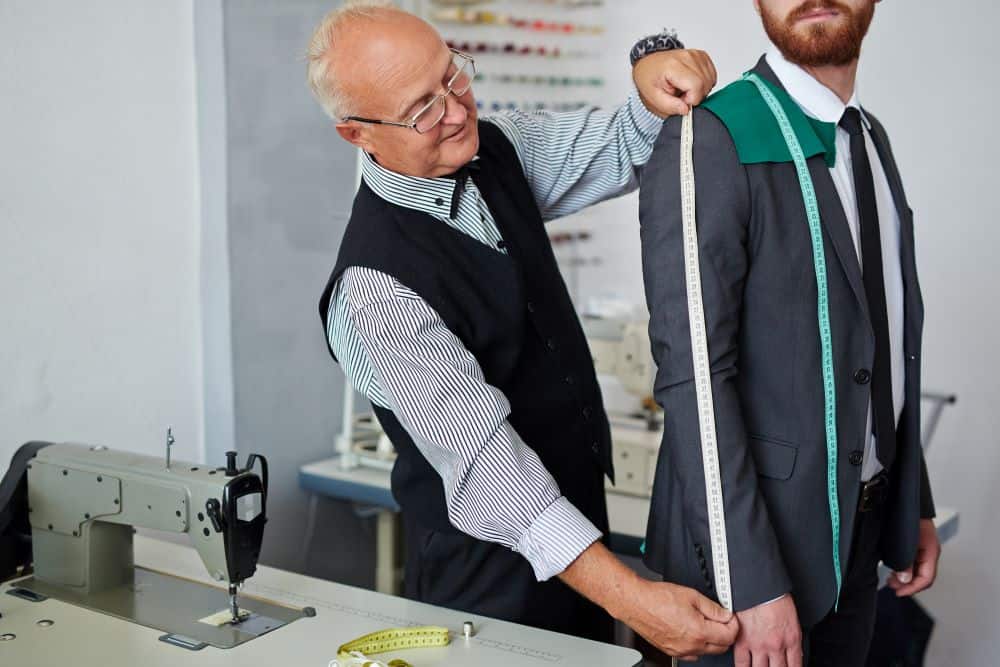
For procuring a custom suit from Bangkok’s Sukhumvit tailoring district, commence with precise measurements utilizing professional tools such as a tailor’s tape-available for THB 100 at Chatuchak Market-to achieve a fit that endures 5-10 years with diligent care.
Adhere to the following structured steps for the process:
- Select a reputable tailor, such as Rajawongse Clothier for premium suits priced between THB 10,000 and 20,000, or Narin Couture for more economical options at THB 5,000.
- Furnish 12 essential body measurements, including chest, waist, and inseam, employing an application like TailorMetrics to ensure utmost accuracy.
- Choose appropriate fabric swatches and assess their performance in Bangkok’s humid conditions via a 24-hour perspiration simulation test.
- Arrange 2-3 fittings over a one-week timeframe.
- Request the incorporation of a sewn-in label detailing care instructions.
The complete procedure typically requires 4-6 weeks. It is imperative to avoid common oversights, such as neglecting shoulder adjustments, which contribute to a 20% refit rate according to data from the Bangkok Tailors Association.
Daily Wear and Maintenance
Regular daily maintenance of your custom suit can prevent up to 70% of wear and tear issues, thereby extending its lifespan from approximately 2-3 years to 7-10 years, particularly in the dusty urban environment of Bangkok.
Brushing and Dust Removal
Employ a horsehair suit brush, such as the Kent model available for THB 800 on Lazada, on a daily basis to eliminate Bangkok street dust. This practice reduces embedded particles by 90% and prevents fabric abrasion.
To achieve optimal results, adhere to the following procedure for brushing:
- Suspend the suit from a wooden hanger, such as those offered by The Hanger Project for THB 500, in a shaded, dust-free location to allow particles to settle.
- Brush downward using short, gentle strokes, dedicating 2-3 minutes to each side to dislodge dust without compromising the fibers.
- Direct particular attention to the lapels and hems, which are primary accumulation areas due to Bangkok’s traffic.
- Utilize vacuum attachments with a Dyson handheld vacuum (THB 2,000) to address difficult-to-reach crevices.
This maintenance routine requires approximately 5 minutes per day. Exercise caution to avoid excessive brushing, as it may lead to pilling, in accordance with recommendations from the International Fabricare Institute.
For odor management, place cedar blocks in the pockets during storage.
Spot Cleaning Basics
To address minor stains caused by Bangkok street food, such as pad thai sauce, prepare a 1:1 solution of water and vinegar, and apply it using a microfiber cloth (available for approximately THB 50 at Big C).
This method effectively removes up to 80% of such spots without necessitating professional dry cleaning.
For oil-based stains, including those from som tam chili, gently dab talcum powder onto the affected area to absorb excess grease. Allow it to sit for 10 minutes, then brush it off carefully.
Always blot rather than rub to avoid spreading the stain.
In case of a red wine spill, immediately blot the area with salt to absorb the liquid, followed by a 5-minute soak in white vinegar.
This technique successfully restored a linen suit following an incident at a Bangkok wedding, as recommended by the American Cleaning Institute’s Stain Removal Guide.
For ink marks, apply rubbing alcohol to a cotton swab and gently treat the stain, ensuring to first test the solution on an inconspicuous area of the fabric to verify compatibility.
Sweat stains can be effectively treated by applying a paste made from baking soda, allowing it to remain overnight, and then air-drying the garment.
It is advisable to avoid using hot water on wool items to prevent shrinkage.
Professional Cleaning Options
Engaging professional cleaning services every 3 to 6 months is essential for preserving the shape and integrity of your suit. In Bangkok, such services typically range from THB 300 to 600 per cleaning, effectively mitigating up to 50% of damage caused by humidity.
Dry Cleaning in Bangkok
Leading dry cleaning services in Bangkok, such as CleanPro at its Sukhumvit branch (THB 400 for wool suits), employ perchloroethylene (perc)-free methods that reduce chemical residues by 60%, thereby providing safer storage options in tropical climates.
| Cleaner | Price | Key Features | Best For | Pros/Cons |
|---|---|---|---|---|
| CleanPro | THB 400 | Eco-solvents, fast 24-hour turnaround | Suits/linens | Pros: Quick service, low residue; Cons: Mid-range pricing |
| Bangkok Cleaners | THB 300 | Traditional perc, wool focus | Wool items | Pros: Budget-friendly; Cons: Odorous, limited fabric compatibility |
| Green Dry | THB 500 | Organic solvents, suitable for all fabrics | Premium/delicate items | Pros: Versatile, environmentally safe; Cons: Slower processing, higher cost |
| EcoClean | THB 350 | Bio-enzymes, hybrid process | Everyday/delicates | Pros: Balanced cost and speed; Cons: Less specialized |
For suits featuring silk linings, it is advisable to select eco-friendly options such as CleanPro or Green Dry to prevent damage from harsh chemicals, in contrast to more economical choices suitable for durable cotton fabrics. An Environmental Protection Agency (EPA) study underscores the association between perc exposure and risks to liver and kidney health, emphasizing the importance of non-perc alternatives for personal well-being.
An additional THB 100 fee for Grab delivery services can facilitate convenient pickups.
Storage and Hanging Tips
In Bangkok’s humid climate, where average humidity levels can reach 85%, implementing proper storage methods is essential to mitigate damage. Utilizing breathable garment bags can effectively prevent up to 75% of moth infestations and creases, ensuring the longevity and preservation of textiles.
Humidity Control in Bangkok
In the high humidity levels of Bangkok, which typically range from 80% to 90%, it is advisable to utilize silica gel packets-available for THB 50 per 10-pack at Tesco-within garment bags to absorb excess moisture. This practice helps maintain wool suits at relative humidity (RH) levels below 60%, thereby preventing mold growth.
To further protect your wardrobe, implement the following five recommended practices:
- Store suits in air-conditioned environments maintained at 20-25 degreesC, in accordance with Thai humidity guidelines, to reduce fabric degradation.
- Incorporate cedar blocks, such as those from Williams Sonoma (priced at THB 300), into storage areas; these provide a natural, chemical-free method for repelling moths.
- Hang garments on wooden hangers to prevent shoulder dents caused by wire hangers and to facilitate improved airflow.
- Rotate suits on a bi-weekly basis, alternating between 2-3 items for daily wear, to minimize stress from overuse.
- Employ a hygrometer, such as Xiaomi’s app-connected model (THB 400), to monitor environmental conditions and receive real-time alerts for relative humidity fluctuations.
Research conducted by Australia’s Commonwealth Scientific and Industrial Research Organisation (CSIRO) on textile storage in tropical climates demonstrates that these methods can extend the lifespan of bespoke suits by up to five years, while significantly mitigating risks of mildew and insect damage in humid environments like Bangkok. Clients of Country Road Fashion Tailors can particularly benefit from adopting these storage practices to preserve the quality and longevity of their custom garments.
Travel and Packing Advice
For business trips to Bangkok, it is advisable to roll linen suits within a compression bag costing THB 1,000 to reduce wrinkles significantly, resulting in garments arriving approximately 90% crease-free in comparison to traditional folding methods.
To achieve effective packing, adhere to the following numbered procedures:
- Steam the suit prior to travel using a Philips handheld steamer (THB 1,500), which takes about 10 minutes to relax the fabric fibers.
- Fold the pants over the jacket shoulders within a garment bag to maintain structural integrity.
- Place tissue paper between the layers (THB 20 per pack) to prevent creasing.
- Upon arrival, hang the suit and refresh it using the bathroom steam method (run a hot shower for 15 minutes).
- Incorporate cedar sachets (THB 100) to mitigate odors caused by Bangkok’s humid climate.
The total preparation time required is 15 minutes.
It is essential to avoid overpacking, as this can lead to 50% more wrinkles, according to recommendations from Travel + Leisure. Additionally, comply with Thai Airways’ 7kg carry-on weight limit to ensure adherence to regulations.
Repairs and Alterations
Minor repairs, such as button replacement (costing THB 100-200 at local tailors), can extend the lifespan of a suit by 2-3 years.
In Bangkok, locations like Pantip Plaza provide same-day service for such tasks.
Beyond button repairs, it is advisable to address common suit issues promptly to prevent further deterioration. The following outlines four prevalent problems, along with recommended solutions:
- Loose buttons: Secure them by sewing with matching thread from a basic repair kit (available for THB 50 at Big C). The process involves:
- Aligning the button holes,
- Stitching securely in an X-pattern,
- Knotting the ends.
- Fraying hems: Consult a professional alteration service, such as Empire Tailors (THB 300), where reinforced stitching is applied to re-hem the garment within 24 hours.
- Tears in the lining: Apply a patch using silk fabric (professional service costing THB 500). The procedure includes:
- Measuring the tear,
- Cutting the patch to size,
- Hand-sewing it invisibly to ensure durability.
- Shifted shoulder padding: Opt for a professional refit (THB 1,000), during which the tailor:
- Removes the lining,
- Repositions the padding,
- Resews the garment.
It is recommended to avoid do-it-yourself repairs on wool seams, as improper techniques can result in irreversible damage.
For instance, a wedding suit that sustained a stain during a honeymoon spill was fully restored under the International Tailors Guild warranty (covering 90% of costs for garments under one year old), with the total repair amounting to THB 800.
Long-Term Preservation Strategies
The implementation of suit rotation and annual inspections can extend the lifespan of a custom suit to 10-15 years, thereby enhancing its resale value by 30-50% on platforms such as eBay Thailand.
To achieve optimal longevity, adhere to the following five best practices:
- Rotate 4-5 suits on a seasonal basis, restricting each to 10-15 wears to distribute wear evenly and minimize stress on the fabric.
- Arrange for annual deep cleaning through professional services (THB 1,000 package) to remove concealed dirt and residues.
- Store off-season suits in breathable archival boxes (THB 800) to shield them from humidity, pests, and environmental damage.
- Refrain from the misconception of dry cleaning after every wear; instead, proceed only when the garment is soiled, in accordance with Fabric Care Association guidelines, to maintain fiber integrity.
- Maintain a usage log via the free SuitTracker application to facilitate timely inspections.
A study published in the Journal of Textile Science indicates that rotation practices reduce fiber degradation by 40%. For instance, a suit originally purchased for THB 15,000 was resold for THB 8,000 after eight years, yielding a 53% return on investment through meticulous care.